
Orlando Oral & Facial Surgery
Are You a Good Candidate for Dental Implants?
It’s estimated that 125 million Americans are missing at least one tooth. If you are one of them, you may be considering dental implants for tooth replacement. We think it’s important for you to know what factors make a person a good candidate for such a procedure. Here are a few things to consider.
Most People Are Good Candidates. Dental implants can replace one, several, or all of your teeth. They can be used in place of bridges or dentures. Good candidates have healthy gums and are old enough so that their jawbone has stopped growing. You should also have enough bone to support and anchor the implants. Even if you have lost bone in your jaw, however, you may still be a good candidate for implants. In fact, dental implants may be recommended to prevent further bone loss. In these situations, bone can actually be rebuilt with grafting procedures as part of the implant process.
Evaluation. Successful implantation starts with a thor ough evaluation of your jaw, teeth, mouth and overall health. You will receive a mouth X-ray and possibly a Computed Tomography (CT) scan. This will help us identify areas of bone loss and carefully see the shape of your sinuses and nerve location to make accurate assessments for your treatment. We will also do a thorough medical evaluation, as your overall health and history plays a big role in how well your implant will heal and fuse to the bone.
People At Risk of Poor Outcomes. Uncontrolled diabetes, cancer, radiation to the jaws, smoking, alcoholism, or uncontrolled gum disease are all risk factors that can adversely affect your outcome. You may still be a good candidate with one of these diseases, but we’ll want to thoroughly assess your situation and work with you and your doctor to increase your overall health and functioning. People who take certain medications, such as steroids or drugs that suppress the immune system may not be suitable candidates, either. And people with certain habits, such as people who severely grind or clench their teeth may put too much pressure on the implants, causing long term damage.
Overall, dental implants have a very high rate of success and patients tell us how happy they are with the outcome. If you are considering implants, we can complete a careful examination to determine what options are best suited for you. Call us today to make that appointment!
What You Should Know About Jaw Reconstruction Surgery
Sometimes jaw problems may require more than orthodontic treatment. Jaw surgery, also known as orthognathic (or-thog-NATH-ik) surgery, can be a great choice for moderate to severe jaw issues.
Oral and Maxillofacial Surgeons (OMS) are specially trained in orthognathic surgery that can dramatically improve chewing, speaking, breathing, and in the process enhance a patient’s appearance.
If you are considering orthognathic surgery, here are some important things to know.
Why You May Need It
Most conditions that require corrective surgery are the result of abnormal growth of the jaws as they develop. These conditions are often inherited.
Other less common causes are facial in jury or arthritis of the jaw joints.
Orthognathic surgery may be indicated for the following conditions:
- Difficulty biting, chewing, or swallowing food
- Excessive wear or breakdown of teeth
- Chronic jaw or jaw joint pain caused by TMJ (temporomandibular joint disorder) or other jaw problems
- “Gummy” smiles, where the lips don’t fully close and show large areas of the gums, or “toothless” smiles, where the lips cover all of the teeth
- Facial imbalance, including underbites, overbites, crossbites, and deficient chins
- Sleep apnea
Treatment Team
While we will plan and perform the actual surgery, we will also be working with your dentist and orthodontist for the full course of treatment.
Most treatment includes braces for 9 to 18 months before surgery to level and align your teeth. After your jaw heals from surgery, which typically takes about 6 weeks, your orthodontist will finish your alignment and remove the braces.
Depending on the severity of your jaw problem, the entire treatment process can take from 12 to 24 months. We know that this is a long-term commitment and we will do our best to minimize the length of treatment and provide you with the best estimates of what will be required.
What to Expect
Jaw surgery can be performed on the upper jaw, lower jaw or both. It is best to perform the surgery after growth stops, usually ages 13 to 15 for females and 16 to 18 for males.
Jaw surgery usually can be performed entirely inside your mouth, so no facial scars show. Once your jaws are properly aligned, screws and bone plates secure the bones into their new position.
In some cases, extra bone may be added to the jaw. In this case, we transfer the bone from your hip, leg, or rib and secure it with temporary wires.
Surgery can take place in an in-patient or out-patient setting, depending on the procedure required. Facial swelling, while variable, is common and increases for a couple of days following surgery before it subsides.
More subtle changes in your appearance will continue for up to a year. For this reason, our students generally choose to have the surgery during school vacations. For adults, one to three weeks is usually required before returning to work.
Jaw surgery can enhance your comfort, appearance, and improve your overall health. We are here to answer any questions you have.
Please make an appointment for a consultation so we can review the potential of this life-changing treatment with you!
Wisdom Teeth: What do I Really Need to Know?
For the majority of people, the removal of their wisdom teeth is just another part of growing up. However, that doesn’t mean it’s an easy part! A combination of frightening stories from friends and false rumors online have may have you feeling anxious about your upcoming procedure. So we’d like to set the record straight and put your mind at ease.
Here is what you really need to know about wisdom teeth:
- If you ignore them, there will be more (pain, that is).
Despite their name, it is not a smart idea to refuse surgery and live with your wisdom teeth. Most wisdom teeth are asymmetrical (they don’t grow evenly) which can cause complications. Asymmetric wisdom teeth have a high chance of developing gum disease and infections, which can become life threatening if not treated.
- Patience is not a virtue.
As wisdom teeth generally form roots during the teenage years, it is better to have them removed during that time. Waiting until you are 30 or 40 can increase the chance of them rupturing a nerve, leading to a longer and more complicated recovery.
- I scream for ice cream!
We recommend that you only ingest liquids for a day after the procedure. Ice cream, pudding and smoothies are all great choices (without straws). Softer foods are advised for the rest of the week, so make sure to stock up on pasta, eggs and mashed potatoes! And remember: NO straws during your recovery period.
- No pain, plenty to gain.
Thanks to anesthesia and/or laughing gas, your wisdom tooth extraction will be painless. However, most of our patients do experience some sort of discomfort in the days following the surgery, so we will suggest methods and medications to help with that while you are in our office.
- Rest is the best!
Post-removal recovery depends on the patient, but most people do not resume work for four-to-five days. Patients are also advised to not exercise vigorously or play any sort of wind instrument for a week.
Osseointegration: Big Word, Simple Concept!
Was this word the invention of an evil doctor who loves long and complicated words? No! Osseointegration actually derives from the Greek osteon, bone and the Latin integrare, to make whole. It’s a physical process that was first observed by Swedish researchers in the 1960’s and refers to the functional connection between a titanium implant and living bone. Simply put, without osseointegration, dental implants wouldn’t work!
Osseointegration is a natural process: When the titanium dental implant connects to bone cells, it is locked into the jawbone, for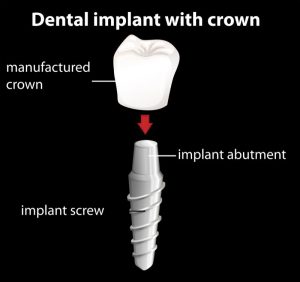 ming a solid bond. While the process is natural, the implementation isn’t simple. Implant healing times and initial stability depend on implant characteristics and to a large extent on your doctor! We have ample experience in placing dental implants and therefore can ensure that you receive the best care and outcome when it comes to implant surgery and the healing process.
The first evidence of the bone bonding with the implant occurs after a few weeks, while a more robust connection progresses over the next months or years. The osseointegration process will make the implant resistant to external shocks over time, but it can still be damaged from trauma or poor care.
The benefits of dental implants can’t be overstated! Not only do they give you a fully functioning bite back, they also prevent your jawbone from deteriorating and protect your facial profile.
Give us a call if you have questions about the dental implant process!
Common Causes of Facial Trauma
Injuries to the face and mouth are emotionally upsetting as well as physically damaging. It’s extremely important to have medical and dental care by experts who know how to address the psychological, medical, and aesthetic elements of recovery. This blog will cover the most common causes of facial trauma and the types of injures that may occur. As with most injuries, prevention is the best medicine, so we will cover tips in avoiding facial trauma all together!
Most Common Causes of Facial Trauma: There are many ways in which the face can be damaged. Accidents, falls, automobile crashes, work related injuries, and interpersonal violence are among the most common causes for adults. For children, sports related injuries are the leading cause. Children who participate in contact sports, cheerleading, and gymnastics are especially at risk, especially for den tal trauma. Dental trauma accounts for 17% of injuries to the body for children, according to the American Dental Association, compared to 5% across all ages. It is most frequently observed in males compared to females, and usually involves the front teeth.
Types of Injuries: Every year about 3 million people are treated for facial trauma according to the American Association of Oral and Maxillofacial Surgeons. Soft tissue trauma includes any cuts to the face or gums. Avulsed, or knocked out teeth are another type of injury, and must be dealt with immediately to increase the chances for reimplantation. Bone injuries, such as fractured jaws, cheekbones, and noses can also occur as well as damage to the nerves in the eyes, face and salivary glands. It is extremely important to have facial trauma assessed and treated by an expert in facial trauma. Besides the aesthetic reasons, serious health complications can occur, even from a small amount of damage. Depending on the location of the injury, speech, swallowing, and breathing can be affected. For dental injury, teeth that are loose in their sockets can make eating difficult and cause speech impediments. Chipped, broken, or misaligned teeth can cause TMJ and other functional problems, in addition to the loss of confidence in your appearance.
What You Can Do to Prevent Injuries: Using a mouthguard during sports or other high-risk activities is the most effective way to prevent injury. Studies in high-risk populations for facial trauma show relatively low compliance in using mouthguards. We can also recommend helmets, face shields, and protective eyewear that can further reduce your risks. The spring season seems to bring an increase of children to the emergency room as kids are eager to get on their bicycles, skateboards, and swing sets. As a parent, educate your child in safety measures and supervise their activity.
When facial trauma does happen, quick action is important. Please call us as soon as possible so we can best advise and support you in your recovery. Accidents happen, and when they do, we want to help!
Our New Blog!
Our new blog has been set up! Please check back soon!